
TREATMENTS

Our Treatments

We offer a comprehensive range of fertility treatments tailored to your unique needs. Our experienced team uses the latest technologies and evidence-based approaches to help you achieve your dream of parenthood.

Treatment Categories

Find out more about the causes of infertility, IVF treatment and male and female infertility.

Infertility

Infertility is a significant reproductive health issue affecting couples of reproductive age, with biological, psychological and social dimensions.

In Vitro Fertilisation (IVF)

IVF is a treatment method in which the woman's egg is fertilised with the man's sperm under laboratory conditions.

Male Infertility

Detailed information on the diagnosis and treatment of male-related infertility causes.

Latest Technologies

Embryology Laboratory

The Fertilist Embryology Laboratory is equipped with a high-security, controlled infrastructure that meets international standards. All fertilisation and embryo development processes are meticulously carried out using state-of-the-art equipment and by experienced embryologists, ensuring the most ideal development environment for the embryos.
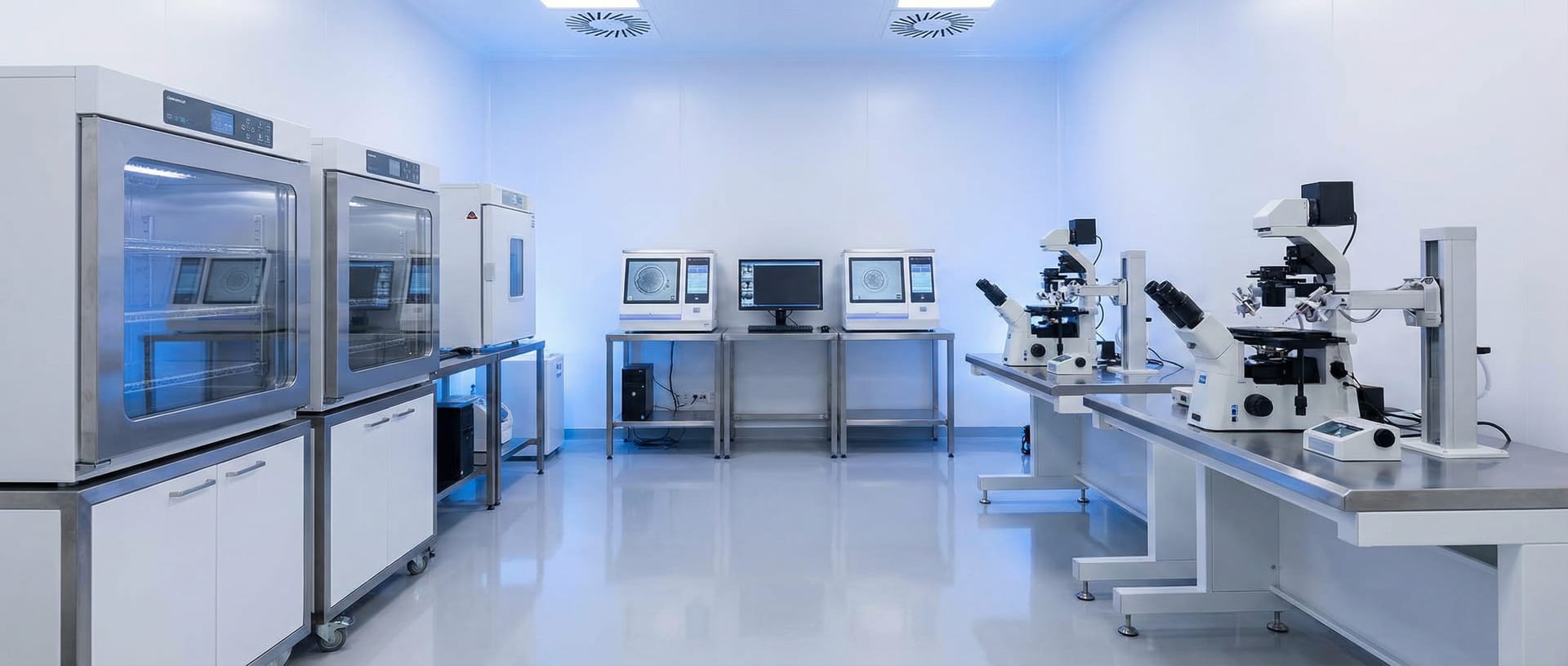
Embryology Laboratory

State-of-the-Art Incubators

Advanced incubator systems ensure that embryos develop under conditions as close as possible to those in the mother's womb. By continuously monitoring temperature, humidity, pH and gas balance, the embryo is supported to grow healthily without being affected by external factors.

Embryoscope (Continuous Embryo Monitoring via Camera)

Embryoscope technology enables embryos to be monitored live 24/7 without being removed from the incubator. This enables the development of the embryo to be assessed in real time, and the embryo with the highest potential for transfer is selected based on scientific data.

Micromanipulator Systems

Micromanipulators ensure that procedures performed on sperm, eggs and embryos are carried out with micron-level precision. It is a critical technology, particularly in microinjection procedures such as ICSI, as it can influence fertilisation success.

Vitrification (Rapid Freezing) Technology

The vitrification method enables embryos, eggs and sperm to be frozen very rapidly, thereby preventing the formation of intracellular ice crystals. This prevents damage to the cells, ensuring high viability rates after thawing and allowing them to be safely used at a later date.

Advanced Techniques

Advanced Techniques

We enhance treatment success using the most advanced techniques in reproductive medicine, offering each patient the most suitable approach.

Preimplantation Genetic Testing (PGT)

PGT enables the genetic structure of embryos to be analysed prior to transfer. By enabling the selection of healthy embryos in couples at risk of carrying genetic disorders or in patients of advanced maternal age, it increases the likelihood of a successful pregnancy and a healthy baby.

Next-Generation Sequencing (NGS)

NGS technology enables a much more detailed and precise examination of the chromosomal structure of embryos. This advanced analysis method offers significant advantages, particularly in cases of recurrent IVF failure and in patients of advanced maternal age.

Laser-Assisted Embryo Hatching

Laser-assisted hatching facilitates the controlled thinning or opening of the embryo's outer membrane. This method can increase the chances of implantation by facilitating the embryo's attachment to the uterine wall.

Embryo Glue

Embryo glue is a special transfer medium used during embryo transfer to support implantation within the uterus. Thanks to the hyaluronic acid it contains, it helps to enhance the embryo's potential to implant in the uterus.

Blastocyst Transfer (Day 5 Transfer)

Blastocyst transfer enables the selection of the strongest embryo, which has been developed in a laboratory environment up to day 5 and has completed its developmental stages as desired. Furthermore, this approach offers the transfer timing closest to natural selection, thereby potentially increasing pregnancy rates.

Micro-TESE (Testicular Sperm Extraction)

Micro-TESE is a surgical method used to search for sperm in testicular tissue under a microscope in men with no sperm in their semen. Thanks to this precise technique, the chance of obtaining sperm is increased whilst causing minimal damage to the tissue.

Sperm Selection with Ultra-High Magnification (IMSI)

The IMSI method allows for the detailed examination of sperm under very high magnification. This enables the selection of the highest-quality sperm from a structural perspective, thereby supporting fertilisation and embryo development success.

Contact Us for More Information and Appointments

Our team of specialists will contact you as soon as possible to provide detailed information.

IVF Process

IVF treatment consists of four stages. These stages can be listed as follows: 1. Assessment of the couple, examination, diagnostic tests and determination of the treatment protocol: During the assessment of the couple, the patient's symptoms, medical history and family history are reviewed, and factors related to the cause of infertility are investigated. An ultrasound scan is performed to examine the structure of the reproductive organs, the uterus and the ovaries, and to identify any diseases or changes in neighbouring organs, investigating their relationship to infertility. If a problem is identified that hinders treatment or reduces the chances of success, steps are taken to resolve this issue first. During the ultrasound scan, an assessment of 'ovarian reserve' is carried out, which plays a significant role in selecting the treatment to be administered in the future and in determining the likelihood of treatment success. In addition, with a view to preparing for pregnancy, the presence of certain hormonal, metabolic and viral diseases that could adversely affect pregnancy, as well as the patient's immune status, is investigated. 2. Stimulation of the ovaries with medication: This constitutes the most important stage of the treatment. The treatment regimen to be administered during ovarian stimulation is determined based on the patient's age, the appearance of the ovaries on ultrasound, hormone test results, and, in patients who have previously undergone IVF, the response to treatment in the previous cycle. The physician's experience in determining this treatment directly influences the outcome. 3. Egg retrieval: Under anaesthesia, guided by transvaginal ultrasound, eggs are aspirated from the follicles containing the egg cells using a fine needle and removed from the body. 4. Embryo transfer: The best 1 or 2 embryos (fertilised eggs) are selected from those monitored in the laboratory and transferred into the uterus using a thin catheter. This procedure is similar to a routine examination and does not require anaesthesia.

The ideal time to start the egg stimulation process in IVF treatment is on the second or third day of the period. However, this is not an absolute requirement. Under certain specific conditions, ovarian stimulation medication can be started at any stage of the menstrual cycle.

Ovarian stimulation typically lasts approximately 8 to 14 days, although in some cases it may be shorter or longer. The growth of follicles that may contain eggs is monitored via ultrasound. Monitoring will require 4-5 visits to the IVF clinic during the course of treatment. In addition to ultrasound scans, hormone monitoring may also be carried out in some women. These hormones include oestrogen, progesterone and LH, and in some cases FSH. Once the follicles have reached the desired size, maturation injections (known as HCG or GnRH analogues) are administered to bring the eggs inside them to full maturity, and, barring certain special circumstances, the oocyte pick-up procedure is usually performed 34-38 hours later.

The oocyte pick-up (OPU) procedure is usually performed under local anaesthesia and takes approximately 15-30 minutes, depending on the number of follicles. If the ovarian response is limited and a small number of eggs are anticipated, the procedure may also be performed under local anaesthesia whilst the patient is awake. Following the procedure, you can return home after approximately 1-2 hours of observation and monitoring.

Once the oocyte pick-up has been completed, fertilisation with sperm takes place. The embryos are then monitored in the laboratory in special culture media for 3-5 days, or in some cases for 6-7 days. If there are any remaining high-quality embryos suitable for freezing after the transfer of those assessed in the laboratory and selected for transfer, these can be frozen and stored for transfer at a later date.

In Türkiye, the number of embryos that can be transferred is determined by regulations; for women under 35, it is limited to 1 embryo for the first 2 attempts, and for women over 35, it is limited to a maximum of 2 embryos. Under no circumstances is the transfer of more than two embryos permitted.

During the IVF treatment, ultrasound scans and blood tests are carried out during the egg stimulation phase to monitor egg development and adjust the dosage. On average, you will need to visit the hospital four or five times during the treatment process for these check-ups. As the time spent at the hospital during these check-ups is brief, they can be carried out without disrupting daily life or work routines.

Egg and Sperm Quality

Various vitamins, hormones and supplements aimed at improving egg quality have been used over the years, but none have been observed to make a clinically significant difference. Quitting smoking and losing excess weight may be beneficial. The most important factor determining egg quality is the woman's age. However, with optimal treatment, care should be taken to obtain the best and healthiest eggs from the ovaries.

Sperm quality is assessed based on three parameters: count, motility and morphological characteristics. Sperm morphology should not be considered as a separate parameter from sperm count and motility. There are certain specific structural abnormalities in sperm that can affect fertilisation and embryo development. In such cases of morphological abnormalities, sperm count and motility are also adversely affected. In such cases, specific solutions that support sperm motility and assist in the activation of the egg can be used to maintain fertilisation rates and prevent adverse effects on embryo development. It has also been demonstrated that microfluidic sperm separation methods may be beneficial. However, their superiority over conventional sperm sorting methods is debatable. Selecting sperm under high magnification (IMSI) is another method that can be used.

In vitro fertilisation, or conventional IVF, involves combining eggs retrieved from the woman with sperm retrieved from the man in a laboratory environment and transferring the embryo into the woman's uterus a certain time after fertilisation has taken place. Intracytoplasmic sperm injection (ICSI) or microinjection, on the other hand, refers to the procedure in which sperm obtained from the man is injected directly into the egg, followed by the embryo being transferred into the woman's uterus after a certain period following fertilisation. In both procedures, the primary aim is to bring the reproductive cells together in an external environment and achieve fertilisation. In the IVF method, sperm and eggs retrieved from the body are brought together in a special environment in the laboratory, and it is expected that fertilisation will occur naturally within a certain period of time. Sperm with insufficient motility and fertilisation capacity, or those that are few in number and severely malformed, cannot penetrate the egg on their own to achieve fertilisation. In such cases, fertilisation is achieved by injecting the sperm into the egg using a fine needle. This procedure is known as microinjection.

Embryo quality is assessed based on the rate of development, cell division characteristics observed during the three- to five-day monitoring period in the laboratory, and the morphological characteristics present at the blastocyst stage. A video recording of each embryo's five-day development within the incubator is examined to determine the time taken to reach specific developmental stages and the quality of these stages. This information is evaluated alongside the morphological characteristics the embryo has reached by day 5 (the structure of the inner cell mass and trophoectoderm cells, the width of the blastocyst cavity, the condition of the zona pellucida membrane surrounding the blastocyst, etc.) to determine embryo quality and select the embryo to be transferred.

Medication Use and Monitoring

In treatments that often begin at the start of the menstrual cycle, or in some cases on any day of the cycle, injections are typically administered for an average of 8-14 days during the egg development phase. When a fresh or frozen embryo transfer is to be performed, progesterone is added to the existing injection treatment and is generally used until the first 8-10 weeks of pregnancy.

One of the most important aspects of IVF treatment is the correct determination of medication doses. The treatment protocol and medication dosage are determined based on the woman's age, weight, hormone test results (AMH), the number of follicles visible on ultrasound, and, if available, the response observed in previous treatments. A lower dose of medication may be required for a young woman with a good ovarian reserve, whilst a higher dose may be necessary for an older woman or one with a low ovarian reserve.

On the day treatment begins, the medications the woman will use are demonstrated by our nurse specialised in this area, who explains the procedure both verbally and in writing whilst administering the first dose. Generally, following this training, patients are able to administer their treatment comfortably in their own environment. However, some of our patients may choose to have their medication administered by visiting a healthcare facility nearby or by contacting the IVF unit where they are receiving treatment.

Alternative Practices and Supportive Treatments

We all hope for every treatment to be successful, and we discuss every option we believe might improve your chances with you. Especially when there are conditions that negatively affect treatment success, such as advanced age or very low ovarian reserve, it is common, and often recommended, to seek hope in methods like 'alternative medicine' out of a sense of helplessness.

Although there are reasonable scientific theories behind some of these procedures, there is no miracle that has been proven by reliable clinical research. We do not actively recommend these treatments to you. Any treatments you are curious about should be discussed with your physician, and a joint decision should be made after weighing the potential benefits and risks.