
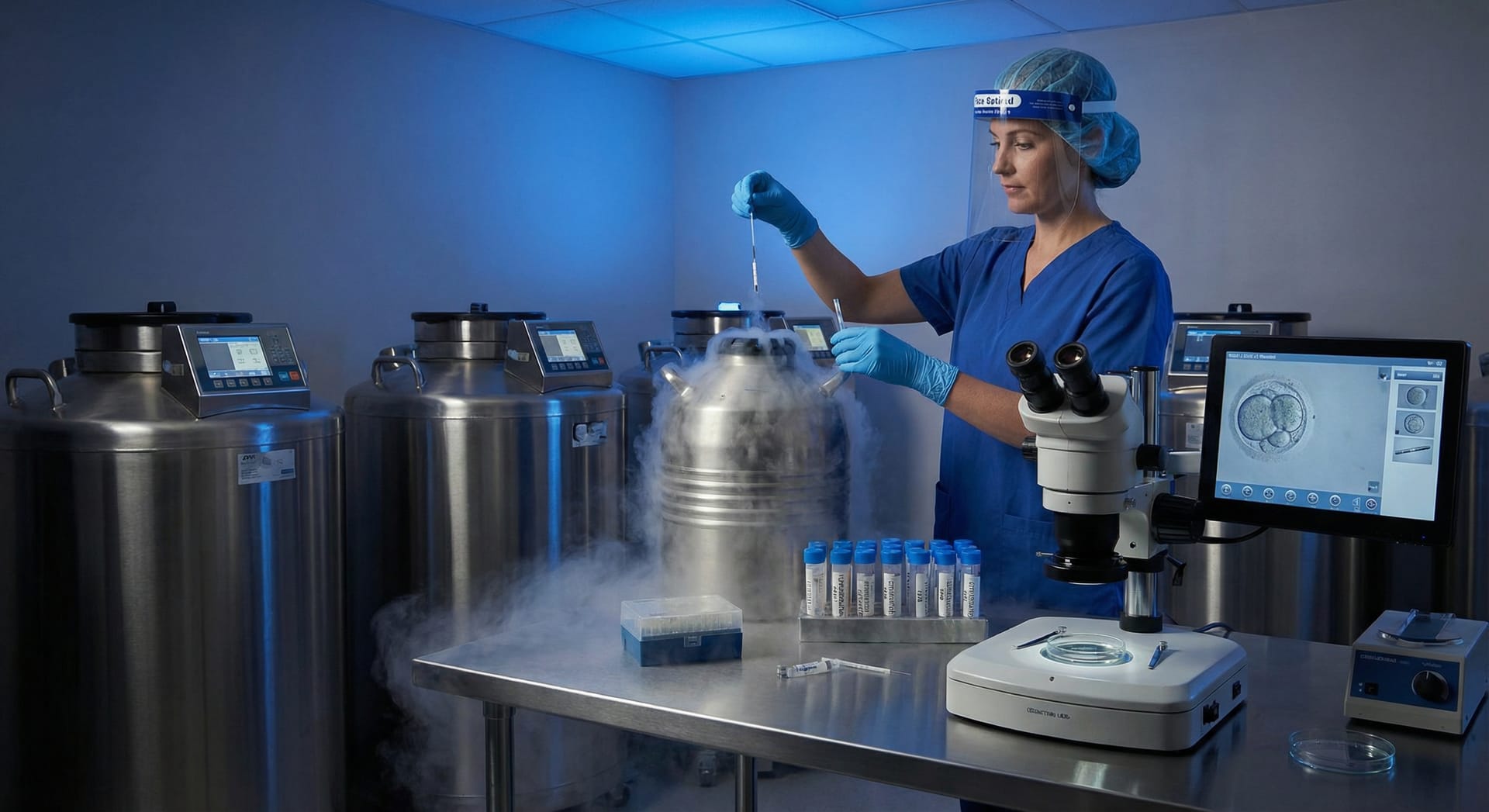


The embryo freezing process begins with the stimulation of the ovaries using medication, followed by the oocyte pick-up stage. Following oocyte pick-up, the eggs are fertilised with sperm in the laboratory. The resulting embryos are monitored in the laboratory under specially prepared conditions, first through fertilisation, then cell division, and finally, if possible, up to the blastocyst formation stage.
Under these conditions, one or at most two embryos that remain viable and meet the defined quality criteria are transferred; the remaining embryos are retained for patients at risk of ovarian hyperstimulation syndrome during ovarian stimulation, for embryos to be biopsied for genetic testing, patients in whom hormonal irregularities are identified during ovarian stimulation, patients requiring surgery on the uterus or fallopian tubes, and oncological patients; these embryos are frozen and preserved at -196 degrees Celsius in special tanks containing liquid nitrogen until treatment is completed. When the transfer is to be performed, once the uterine lining has matured sufficiently and is ready for transfer, the embryos are removed from storage, thawed, and then transferred into the uterus.