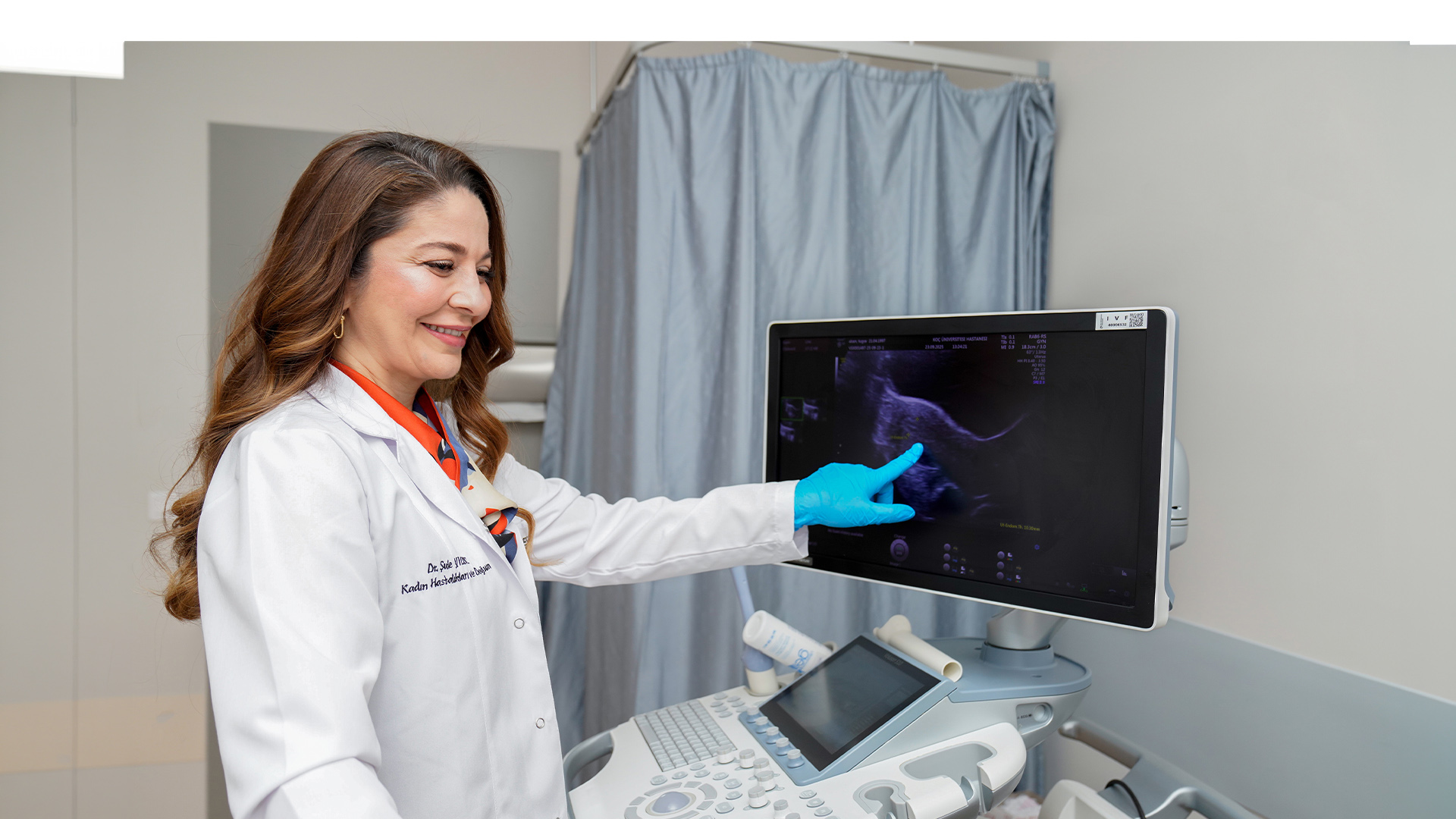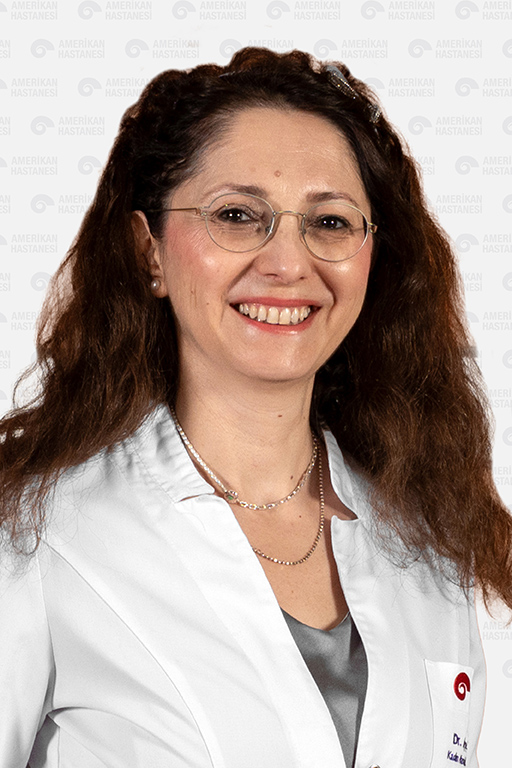
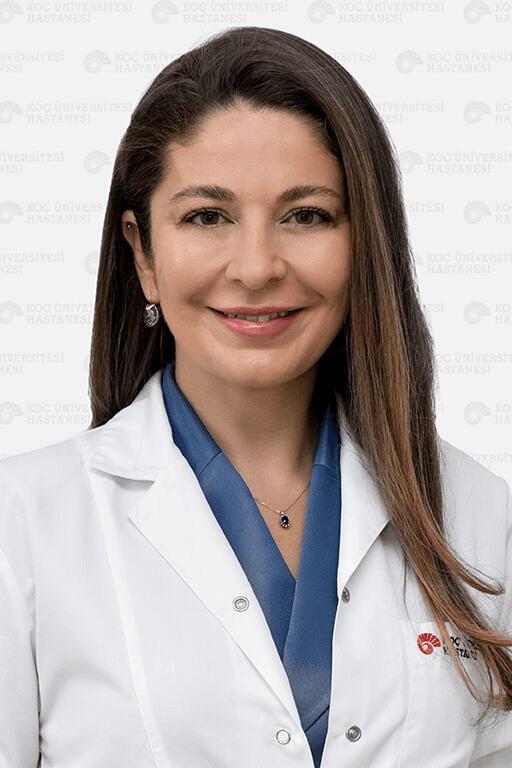
Assoc. Prof. Şule Yıldız, M.D.

Obstetrics and Gynecology - IVF

Portrait of Assoc. Prof. Şule Yıldız, M.D.

Clinical Interest Areas

IVF treatmentFemale infertilityMale infertilityFertility preservationRecurrent pregnancy lossesEndometriosis/AdenomyosisFibroidsPolycystic ovary syndromeReproductive endocrinologyMenstrual irregularitiesPregnancy follow-up and delivery

About

  • Completed her residency in Obstetrics and Gynecology at Gazi University Faculty of Medicine in 2013.
  • During residency, studied at Berlin Charité University Obstetrics and Gynecology Clinic with an ERASMUS scholarship and at Yale University Reproductive Medicine Research Center in the USA.
  • Started working as a specialist at Koç University Hospital Obstetrics and Gynecology Department in 2016.
  • Completed the assisted reproductive treatment applications certification program at VKV American Hospital IVF Center in 2018.
  • Between 2018-2021, conducted research in Endometriosis, Adenomyosis, and Infertility at Northwestern University Feinberg School of Medicine, Reproductive Endocrinology and Infertility Division. Performed research using next-generation sequencing techniques on endometrial tissue and participated in endometriosis and stem cell research. Earned the TÜBİTAK 2219 Postdoctoral Research Fellowship during this period.
  • Since 2021, continues her academic career as faculty member at Koç University School of Medicine. Conducts laboratory research in reproductive medicine and infertility at KUTTAM (Koç University Translational Medicine Research Center).
  • Received the title of Associate Professor in 2024.
  • Has been teaching at Koç University Reproductive Medicine Doctoral Program since 2021.
  • Sees patients at Koç University Hospital IVF Center and Obstetrics and Gynecology Department.

Education

EducationInstitutionYear
Reproductive Endocrinology and Infertility TrainingNorthwestern University Feinberg School of Medicine, Reproductive Endocrinology and Infertility Research Center2018 - 2021
Assisted Reproductive Treatment TrainingAmerican Hospital2018
Obstetrics and Gynecology ResidencyGazi University Faculty of Medicine2008 - 2013
Medical Degree (MD)Ankara University Faculty of Medicine2001 - 2007

Career

PositionInstitutionYear
Faculty Member / Assoc. Prof.Koç University Hospital2016 - Present
Reproductive Medicine Clinical and Translational Research FellowNorthwestern University, Reproductive Endocrinology and Infertility2018 - 2021
SpecialistKoç University Hospital2016 - 2018
SpecialistIstanbul Private Hospitals2015 - 2016
SpecialistŞanlıurfa Harran State Hospital2013 - 2015
ResidentGazi University Faculty of Medicine, Obstetrics and Gynecology2008 - 2013
General PractitionerDüzce 112 Health Services2007 - 2008

Photos

Assoc. Prof. Şule Yıldız, M.D. - Photo 1
1 / 3

Contact Us for More Information and Appointments

Our team of specialists will contact you as soon as possible to provide detailed information.

IVF Process

IVF treatment consists of four stages. These stages can be listed as follows: 1. Assessment of the couple, examination, diagnostic tests and determination of the treatment protocol: During the assessment of the couple, the patient's symptoms, medical history and family history are reviewed, and factors related to the cause of infertility are investigated. An ultrasound scan is performed to examine the structure of the reproductive organs, the uterus and the ovaries, and to identify any diseases or changes in neighbouring organs, investigating their relationship to infertility. If a problem is identified that hinders treatment or reduces the chances of success, steps are taken to resolve this issue first. During the ultrasound scan, an assessment of 'ovarian reserve' is carried out, which plays a significant role in selecting the treatment to be administered in the future and in determining the likelihood of treatment success. In addition, with a view to preparing for pregnancy, the presence of certain hormonal, metabolic and viral diseases that could adversely affect pregnancy, as well as the patient's immune status, is investigated. 2. Stimulation of the ovaries with medication: This constitutes the most important stage of the treatment. The treatment regimen to be administered during ovarian stimulation is determined based on the patient's age, the appearance of the ovaries on ultrasound, hormone test results, and, in patients who have previously undergone IVF, the response to treatment in the previous cycle. The physician's experience in determining this treatment directly influences the outcome. 3. Egg retrieval: Under anaesthesia, guided by transvaginal ultrasound, eggs are aspirated from the follicles containing the egg cells using a fine needle and removed from the body. 4. Embryo transfer: The best 1 or 2 embryos (fertilised eggs) are selected from those monitored in the laboratory and transferred into the uterus using a thin catheter. This procedure is similar to a routine examination and does not require anaesthesia.

The ideal time to start the egg stimulation process in IVF treatment is on the second or third day of the period. However, this is not an absolute requirement. Under certain specific conditions, ovarian stimulation medication can be started at any stage of the menstrual cycle.

Ovarian stimulation typically lasts approximately 8 to 14 days, although in some cases it may be shorter or longer. The growth of follicles that may contain eggs is monitored via ultrasound. Monitoring will require 4-5 visits to the IVF clinic during the course of treatment. In addition to ultrasound scans, hormone monitoring may also be carried out in some women. These hormones include oestrogen, progesterone and LH, and in some cases FSH. Once the follicles have reached the desired size, maturation injections (known as HCG or GnRH analogues) are administered to bring the eggs inside them to full maturity, and, barring certain special circumstances, the oocyte pick-up procedure is usually performed 34-38 hours later.

The oocyte pick-up (OPU) procedure is usually performed under local anaesthesia and takes approximately 15-30 minutes, depending on the number of follicles. If the ovarian response is limited and a small number of eggs are anticipated, the procedure may also be performed under local anaesthesia whilst the patient is awake. Following the procedure, you can return home after approximately 1-2 hours of observation and monitoring.

Once the oocyte pick-up has been completed, fertilisation with sperm takes place. The embryos are then monitored in the laboratory in special culture media for 3-5 days, or in some cases for 6-7 days. If there are any remaining high-quality embryos suitable for freezing after the transfer of those assessed in the laboratory and selected for transfer, these can be frozen and stored for transfer at a later date.

In Türkiye, the number of embryos that can be transferred is determined by regulations; for women under 35, it is limited to 1 embryo for the first 2 attempts, and for women over 35, it is limited to a maximum of 2 embryos. Under no circumstances is the transfer of more than two embryos permitted.

During the IVF treatment, ultrasound scans and blood tests are carried out during the egg stimulation phase to monitor egg development and adjust the dosage. On average, you will need to visit the hospital four or five times during the treatment process for these check-ups. As the time spent at the hospital during these check-ups is brief, they can be carried out without disrupting daily life or work routines.

Success Rates

The most up-to-date measure of success is the live birth rate of a single healthy baby per IVF cycle initiated. Multiple pregnancies are now considered high-risk, and transferring embryos one at a time wherever possible has become a global trend.

There are many variables that determine the chances of success in IVF, but the most important of these are the woman's age and ovarian reserve. In younger women with high ovarian reserve, the pregnancy rate (defined as the proportion of pregnancies resulting in live birth following the sequential transfer of all embryos obtained from a single egg retrieval) is higher. However, in women over the age of 40, this rate decreases, and by the age of 45, it drops to very low levels. Unfortunately, these results are not altered by supplements or 'rejuvenating' agents administered to the ovaries. AMH is one of the most reliable markers of ovarian reserve. Although a low AMH level does not necessarily mean pregnancy will or will not occur, it indicates that the number of oocytes picked up during the oocyte pick-up procedure will be low. Sperm quality is also a factor that directly affects embryo quality and the chances of pregnancy. In cases where there are very few sperm in the semen or where sperm must be retrieved from the testicles, embryo development is adversely affected.

Ovarian reserve is determined by an experienced physician performing a transvaginal ultrasound scan to assess the number of antral follicles present in the ovaries and their distribution. With advancing age, there will be a loss in the ovarian reserve; concurrently, there will be a reduction in ovarian volume and a decrease in the number of antral follicles. In addition to ultrasound, anti-Müllerian hormone (AMH) is the marker that best reflects ovarian reserve. Low AMH levels allow us to predict that the response from the ovaries during treatment will be poor, enabling us to tailor the treatment protocol accordingly.

In patients who have previously undergone unsuccessful IVF attempts, the most important factor determining the chances of success in the next treatment is the information regarding the ovarian response and embryo quality from the first treatment. When planning a new treatment, data from the previous treatment cycle is taken into account to plan how to obtain the healthiest and highest number of eggs from the ovaries. A history of low oocyte pick-up or poor-quality embryo development may be due to factors related to the patient, or it may be linked to the treatment protocol and medication doses used, as well as laboratory conditions. Other reasons for failure to achieve success include fibroids, polyps, blocked fallopian tubes, uterine malformations and intrauterine adhesions. Correcting these issues, where applicable, will increase the chances of pregnancy. Additional tests and assessments, such as investigations into coagulation disorders (congenital or acquired) and immune function, are not routinely recommended. The cause-and-effect relationship for both is unclear.

Various supportive medications, primarily the hormone progesterone, are used to support the embryo's implantation in the uterus following embryo transfer. The use of medications without scientific evidence (such as aspirin, blood thinners, agents that inhibit uterine contractions, immunosuppressive drugs, etc.) or strict bed rest will not increase the embryo's chances of implantation and will only cause unnecessary anxiety and expense.